
_%253C-%253E1708724263995_9Y10OskXA8FdggLg.jpeg&w=3840&q=75)
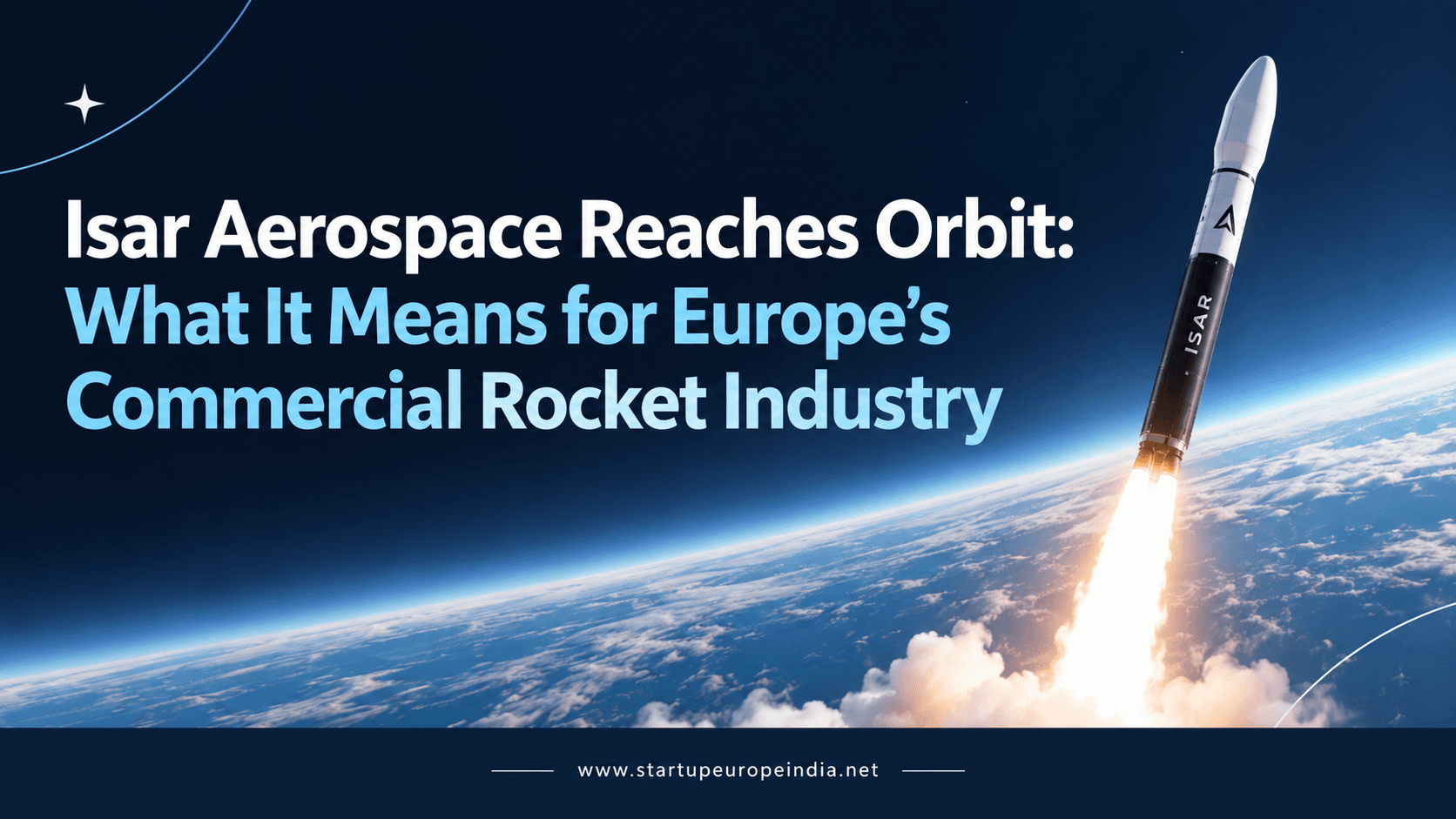
German company Isar Aerospace has successfully launched its Spectrum rocket into orbit, marking an important milestone for Europe's privately developed launch industry. How does Spectrum compare with SpaceX, ISRO, China and Russia, and why is the launch significant?
On 5 September 2026, German aerospace company Isar Aerospace successfully launched its Spectrum rocket from Andøya Spaceport in Norway.
The flight reached orbit and deployed its customer payloads. It was the second flight of Spectrum, following an unsuccessful first launch in March 2025.
The significance of the mission is specific: Spectrum is a privately developed European orbital launch vehicle that has now demonstrated successful orbital flight.
This is different from saying that Europe has developed a rocket comparable in capability to the largest launch vehicles operated by SpaceX, China, India or Russia.
The comparison becomes clearer when the launch vehicles and the underlying industrial models are examined separately.
1. What is Isar Aerospace?
Isar Aerospace is a German private aerospace company founded in 2018 and headquartered in Ottobrunn, near Munich.
Its launch vehicle is Spectrum, a two-stage rocket designed primarily to launch small and medium-sized satellites into low Earth orbit and sun-synchronous orbit.
Key specifications published by Isar include:
Specification Spectrum Height 28 metres Diameter 2 metres Stages 2 LEO payload Up to 1,000 kg SSO payload Up to 700 kg First-stage engines 9 Aquila engines Second-stage engines 1 Aquila engine Propellant Liquid oxygen + propane Current first stage Expendable
The September 2026 flight was therefore an orbital demonstration and commercial launch milestone, rather than the introduction of a heavy-lift rocket.
2. How does Spectrum compare with SpaceX?
The most useful comparison is with Falcon 9, because Falcon 9 is SpaceX's principal commercial orbital launcher.
Isar Spectrum SpaceX Falcon 9 Height 28 m 70 m LEO payload Up to ~1 tonne Up to 22.8 tonnes Stages 2 2 First-stage engines 9 9 First-stage reuse No Yes Primary market Small/medium satellites Broad commercial and government missions Orbital status Successful orbital flight demonstrated in 2026 Mature operational system
SpaceX's Falcon 9 lifts up to 22,800 kg to LEO when flown expendable (about 17,500 kg when the booster is recovered).
On published payload capacity, Falcon 9 can therefore place more than 20 times as much mass into LEO as Spectrum.
The two rockets also have different launch architectures.
Spectrum is currently an expendable launcher. Falcon 9's first stage is designed for recovery and reuse.
This distinction affects the economics and operational model of the two systems, but the most straightforward factual comparison is that they occupy different payload classes and are at different stages of operational maturity.
3. How does Spectrum compare with India's ISRO?
India has a much longer-established orbital launch programme.
The Indian Space Research Organisation (ISRO) operates the PSLV, GSLV and LVM3 launch vehicle families.
The LVM3 is particularly useful for comparison.
ISRO's own published specifications give LVM3 a payload capability of approximately 8,000 kg to a 600 km circular low Earth orbit. The vehicle is approximately 43.5 metres tall with a liftoff mass of about 640 tonnes.
The comparison is therefore:
Spectrum ISRO LVM3 Height 28 m ~43.5 m LEO payload class ~1 tonne ~8 tonnes Stages 2 3 Reusable No No Development model Private company Indian national space programme Operational history Orbital success demonstrated in 2026 Multiple successful missions since 2017
ISRO has also used LVM3 for commercial satellite launches, including missions for OneWeb.
The two systems therefore differ both in payload class and in their institutional origins.
4. How does it compare with China's rockets?
China operates a large family of Long March launch vehicles covering a wide range of payload classes.
One of the country's largest operational launchers is Long March 5.
Long March 5 has a published payload capability of approximately 25 tonnes to low Earth orbit.
That puts Long March 5 in a completely different payload category from Spectrum.
Spectrum Long March 5 LEO payload ~1 tonne ~25 tonnes Stages 2 2 core stages plus strap-on boosters Reusable No No Launch system Private European company Chinese national launch system Major applications Commercial satellite launches Large spacecraft, space infrastructure and exploration missions
China's launch capability also includes human-spaceflight and lunar missions, alongside a growing commercial launch sector.
Therefore, the significance of Spectrum's flight should not be measured against China's overall space programme in terms of technical capability.
The relevant development is instead the emergence of another European commercial launch provider.
5. How does it compare with Russia?
Russia has extensive orbital-launch heritage through the Soviet and Russian space programmes.
The Soyuz family is one of the world's longest-operating orbital launch systems.
The comparison is therefore fundamentally different from the comparison with Isar.
Russia's launch capability is based on decades of accumulated development and operational experience, while Isar represents a new private European entrant into orbital launch services.
Russia also operates launch vehicles across several payload classes.
Consequently, Spectrum's successful orbital flight does not represent a replacement for Russia's existing launch capabilities. It represents the addition of a new European commercial launch capability.
6. Europe already had rockets. So what is different about Isar?
This is perhaps the most important factual distinction.
Europe did not previously lack orbital launch vehicles.
The European launcher programme includes:
Ariane 6
Europe's principal heavy launcher.
Ariane 6 is available in two configurations:
Ariane 62
Ariane 64
The Ariane 64 configuration can carry approximately 21.6 tonnes to low Earth orbit, roughly double the Ariane 62 configuration's capacity of about 10.3 tonnes.
Vega-C
A smaller European launcher designed for missions including Earth-observation and other satellites.
Vega-C's payload capability varies according to orbit, with a reference payload capacity of approximately 2.3 tonnes to a 700 km polar orbit.
Spectrum therefore isn't Europe's first orbital rocket.
It is significant because it represents a privately developed European launcher operating outside the traditional Ariane/Vega programme structure.
7. The European commercial-launch landscape is expanding
Isar Aerospace is also not the only European company developing an orbital launcher.
Germany's Rocket Factory Augsburg (RFA) is developing RFA ONE.
Spain's PLD Space is developing the Miura family of launch vehicles.
The European Space Agency has established programmes intended to support the development of commercially operated European launch services.
ESA's European Launcher Challenge is specifically designed to establish additional European commercial launch-service providers and increase European access to space. Isar Aerospace was one of the operators selected for the programme, and its contract requires an orbital launch no later than 2027, a milestone the September 2026 flight has already satisfied.
The development can therefore be viewed as an expansion from a European launcher structure dominated by institutional programmes toward a structure that includes multiple privately developed launch companies.
8. What has actually been proven by the September 2026 flight?
It is useful to separate what the flight demonstrates from what remains to be demonstrated.
Demonstrated
1. Orbital capability
Spectrum successfully reached orbit.
2. Private European development
The vehicle was developed by Isar Aerospace rather than being an Ariane or Vega government/industrial programme.
3. Commercial launch capability
The mission carried customer payloads.
4. European launch infrastructure
The launch took place from Andøya Spaceport in Norway.
Not yet demonstrated by this flight
A single successful flight does not establish:
long-term launch reliability
high launch cadence
large-scale rocket manufacturing
commercial profitability
reusability
Falcon 9-level launch economics
large-scale constellation deployment capability
Those are separate performance and business metrics that require additional operational evidence.
9. The numbers put the achievement in perspective
A simple payload comparison illustrates the different positions of the major launch systems:
Launcher Approximate LEO payload Reusable first stage? Isar Spectrum ~1 tonne No Vega-C ~2.3 tonnes to 700 km polar orbit No ISRO LVM3 ~8 tonnes to 600 km orbit No Ariane 64 ~21.6 tonnes to LEO No SpaceX Falcon 9 ~22.8 tonnes to LEO Yes China Long March 5 ~25 tonnes to LEO No
These figures should not be interpreted as a ranking of the overall space programmes. Payload capacity depends on the target orbit and mission configuration, and launch vehicles are designed for different markets.
But they show clearly that Spectrum belongs to a smaller payload class than Falcon 9, Ariane 64, LVM3 and Long March 5.
10. Why the launch matters for Europe
The factual significance is therefore not primarily the size of Spectrum.
It is the change in the composition of Europe's launch industry.
Europe now has:
Institutional launch systems
Ariane 6
Vega-C
and an expanding group of:
Privately developed commercial launch systems
Isar Aerospace
Rocket Factory Augsburg
PLD Space
other emerging European providers
This creates a broader European launch ecosystem with multiple companies developing their own vehicles, propulsion systems, manufacturing processes and commercial customer bases.
For European governments and institutions, additional domestic launch providers can also provide another source of launch capacity for European satellites.
That is relevant to Europe's objective of maintaining autonomous and resilient access to space. ESA and the European Commission have both identified this as an important element of European space policy.
11. The significance in one sentence
The most factually precise way to describe the September 2026 achievement is:
Isar Aerospace has demonstrated that a privately developed European orbital launch vehicle can successfully reach orbit and deliver customer payloads, adding a new commercial-launch capability to Europe's existing Ariane and Vega programmes.
It is not evidence that Spectrum has the launch capacity of Falcon 9, LVM3, Ariane 6 or Long March 5.
It is evidence that Europe's launch sector now includes a privately developed orbital rocket that has successfully completed an orbital mission.
The next stage is operational: repeated launches, reliability, manufacturing scale, pricing, customer demand and the development of future launch vehicles.
That is where the significance of Isar Aerospace will ultimately be measured.