
_%253C-%253E1708724263995_9Y10OskXA8FdggLg.jpeg&w=3840&q=75)
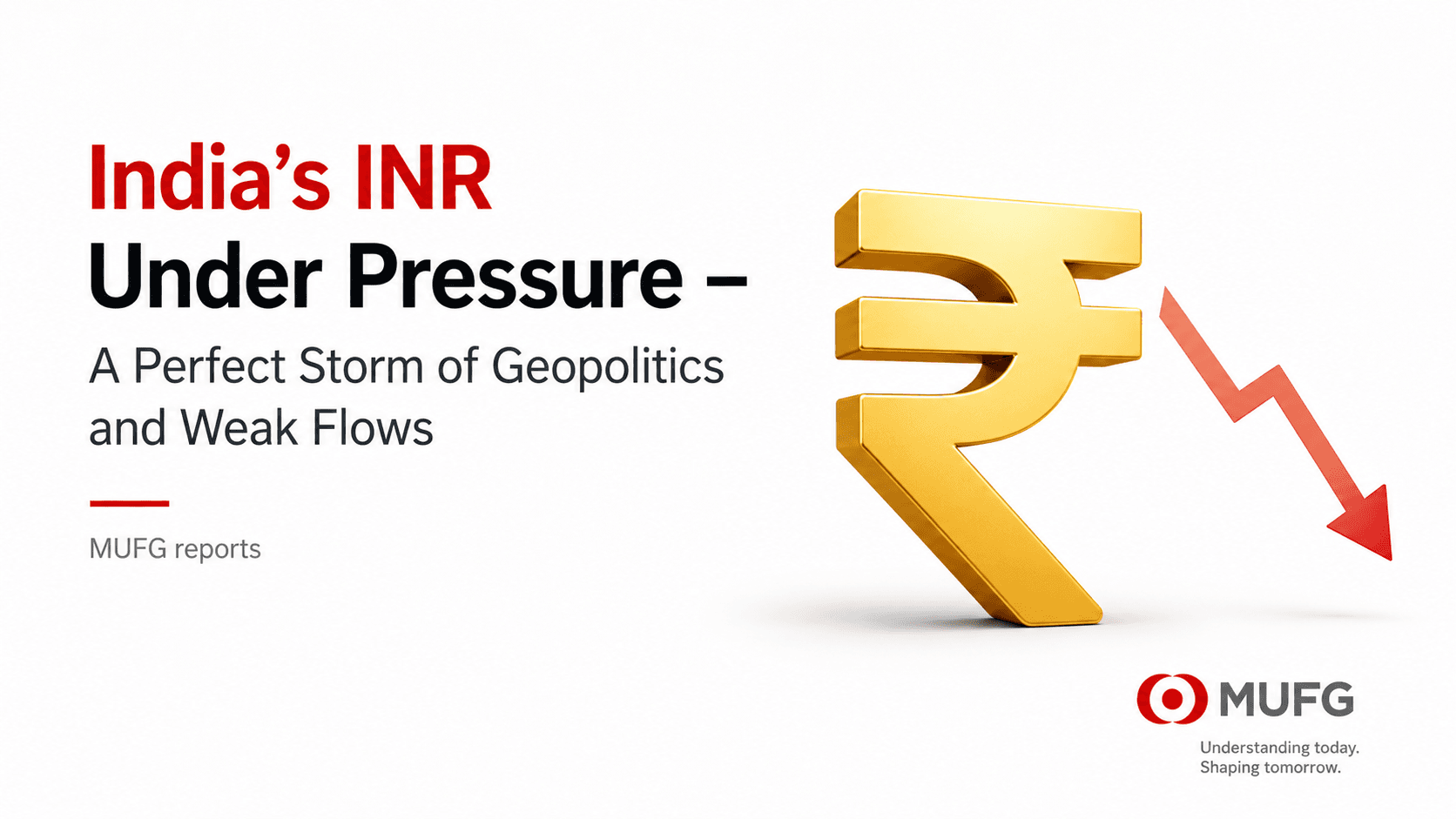
MUFG argues the Indian Rupee is vulnerable across multiple scenarios, with the immediate trigger being tension over the Strait of Hormuz. The note sees USD/INR moving toward 98.00 and even 100.00 if the Iran conflict prolongs, and forecasts the RBI hiking rates by 50bps to 5.75%, with risk scenarios reaching 6.25%–6.75%. Crucially, the bank's core thesis is that the weakness is structural, not just geopolitical - a problem of weak capital inflows that predates the conflict and will persist even if tensions ease.
The key learnings:
The driver mix is broader than oil. INR underperformance is driven by a combination of weak capital inflows, a wider current account deficit with higher oil prices, and potential energy supply disruption from a prolonged conflict. On top of that, a possible weak Southwest Monsoon, a "Super El-Nino," and uncertainty around further increases in US yields add meaningful left-tail risks.
The flows problem is structural and predates the crisis. This problem of weak capital inflows into India predates the Iran conflict and is likely to continue even with de-escalation - and MUFG notes that more participants, including the RBI and government, are now recognizing the underlying shift in India's balance of payments.
Rate hikes are framed as currency defense, not just inflation control. The forecast is for the RBI to hike at least 50bps this fiscal year to a 5.75% terminal repo rate, partly as a measure to shore up INR by raising relative rates of return while managing inflation expectations, with the hikes penciled in for the June and August meetings.
Markets have already priced in significant risk premium. More than 125bps of RBI rate hikes are already priced over the next 12 months, and 12-month USD/INR forwards are a touch below 100. Despite that, MUFG still favors buying dips in USD/INR and recommends staying patient rather than chasing levels excessively.
Authorities are intervening, but with side effects. Steps already taken include gradually raising domestic fuel prices, increasing gold import duties, restricting silver imports, introducing some work-from-home measures, and tightening scrutiny of the INR NDF market. The lesson here is that intervention isn't free — the NDF restrictions had unintended negative spillovers on foreign bond investor sentiment as hedging costs spiked. Looking ahead, MUFG expects further fuel hikes, tightening of the Liberalised Remittance Scheme, lower caps on Indian companies' overseas direct investment, and foreign-currency bond issuance to tap Non-Resident Indian funds.
The deepest takeaway: policy tweaks alone won't fix it. For these measures to have a durable impact on supporting INR, ease of doing business in India must be improved and ultimately improve long-term earnings prospects relative to other markets. In other words, the currency problem is a competitiveness-and-returns problem in disguise.
Complete report here: https://www.mufgresearch.com/fx/india-a-perfect-storm-22-may-2026/
Startup Europe India Network is a curated Europe–India–UK platform for technology and science leaders, enabling cross-border collaboration, strategic partnerships, intelligence sharing, and scaling across deep tech and innovation sectors. Get access www.startupeuropeindia.net