

_<->1708724263995_9Y10OskXA8FdggLg.jpeg)
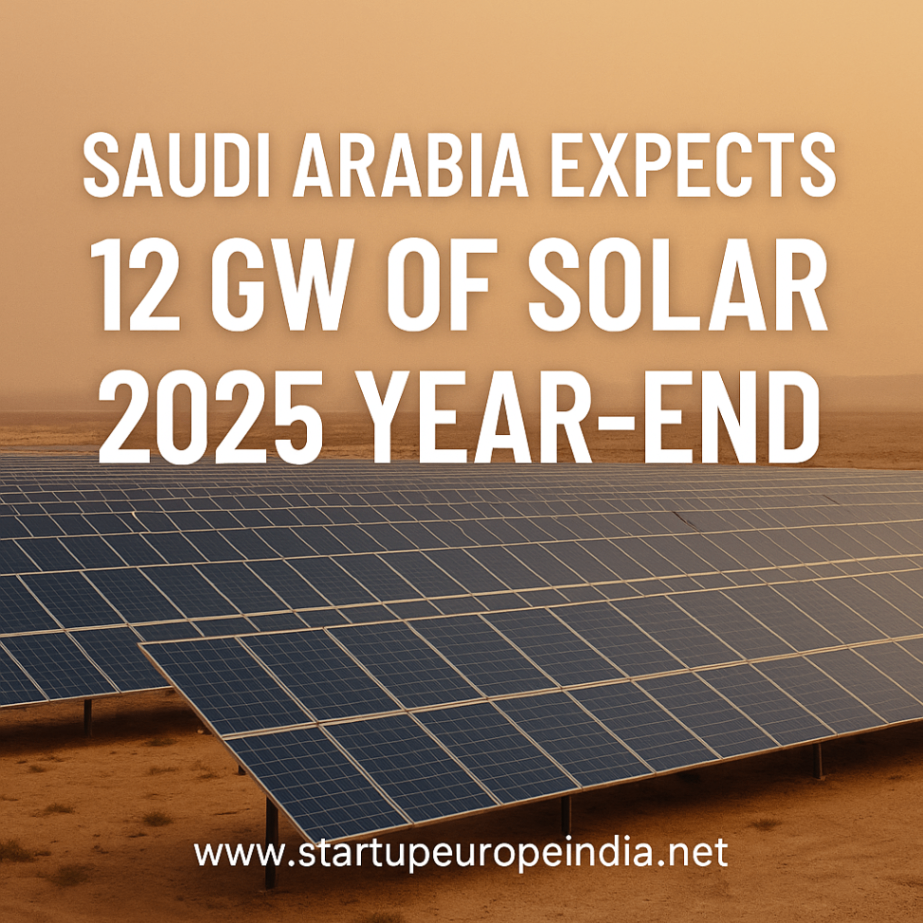
Saudi Arabia is accelerating an ambitious pivot toward renewables, rapidly building utility-scale solar as part of a broader economic calculus to free oil for export and diversify under Vision 2030. The kingdom, long seen as a brake on global climate action, now ranks among the fastest movers in new solar capacity-without signaling an end to its fossil-fuel dominance.
Key assets and capacity ramp-up
- Al Shuaibah 2, now the country’s largest solar farm, exceeds 2 GW-enough to power roughly 350,000 homes-and is one of several mega-projects advancing across desert sites south of Jeddah. Larger plants are already in development as capacity scales.
- After having “next to no renewables” in 2020, Saudi Arabia is expected to reach about 12 GW of solar by year-end 2025, pushing it into the top 10 global markets for annual new solar additions for the first time.
- Rystad Energy projects more than 70 GW of solar installed by 2030, with onshore wind also entering the mix.
Strategic investment and partnerships
- ACWA Power, alongside Badeel and Saudi Aramco Power Company (SAPCO), announced a $8.3 billion program to deliver 15 GW of renewables (12 GW solar; 3 GW wind), with operations slated to begin from late 2027 to early 2028.
- The program aligns with Vision 2030 and the National Renewable Energy Program, under which Saudi aims to source 50% of electricity from clean energy and 50% from gas by 2030.
- The kingdom is also building clean power supply for flagship developments, including the $500 billion NEOM city and Red Sea tourism projects, with integrated storage and smart-grid solutions.
Economics driving the build-out
- Utility-scale solar has benefited from sharply lower module prices—driven in part by Chinese panel imports—and battery costs that fell an estimated 40% in 2024, improving solar’s dispatchability and reducing system costs.
- Saudi Arabia’s solar economics are strengthened by abundant sun, cheap land, low-cost grid connections near major load centers, and economies of scale from very large installations.
- A core aim is to displace domestic oil-fired power, reserving crude for higher-margin export markets. Burning oil for electricity is comparatively inefficient, and shifting generation to renewables and gas supports export revenues.
Storage and grid flexibility
- Saudi Arabia is emerging among the top 10 global battery storage markets, with a target of 48 GWh of storage by 2030 and major projects—such as the Bisha 2,000 MWh facility—helping to firm solar output and stabilize the grid.
- Planned milestones include bringing 8 GWh online by 2025 and 22 GWh by 2026, positioning the kingdom near the global leaders in storage deployment.
Progress and constraints
- Despite rapid build-out, renewables’ share in the electricity mix remained low at the end of 2024 (around 2%), reflecting how quickly demand is rising and how dominant gas remains.
- Independent trackers rate Saudi’s overall climate policy as critically insufficient relative to pathways aligned with limiting warming, and analysts caution the 50% clean-electricity target by 2030 may be challenging.
- Others are more optimistic, projecting the kingdom can surpass one-third renewables by 2030 and achieve 50% soon after, particularly if storage and grid integration keep pace with solar expansion.
Competitive positioning vs. global peers
- Saudi Arabia’s strategy diverges from current U.S. federal headwinds to wind and solar, pursuing an “all of the above” energy mix while scaling clean-tech manufacturing and EV ambitions.
- Regionally, the UAE, Oman, and even Iran are expanding renewables to address reliability, growth, and sanctions-related constraints—yet Saudi’s scale, financing, and integrated energy industrial base give it a unique edge.
Energy diversification without an end to oil
Saudi Arabia’s renewables push is rooted in economics, grid modernization, and a bid to future-proof export revenues. Solar deployment, backed by storage and large-scale transmission, is reshaping the domestic power stack. But the kingdom remains a petrostate, expanding gas capacity and asserting oil’s role in global markets and diplomacy. The most likely trajectory is a dual-track energy system: rapid growth in clean power within Saudi Arabia, coupled with sustained-and strategically defended-fossil-fuel leadership abroad.
---
Startup Europe India Network is a B2B Digital Platform enabling partnerships, innovations and acquisitions in the Europe-UK-India corridor.
0

Comments